https://cuilcaghlakelands.org/news-item/celebrating-international-day-of-caves-and-karst/
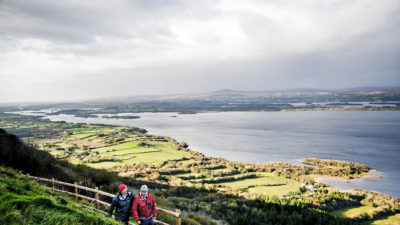
Today we celebrate the extraordinary cave and karst landscapes of Cuilcagh Lakelands Geopark, one of the most significant karst regions in Ireland and north-west Europe.
Developed within Carboniferous limestone over millions of years, the Geopark’s caves, sinking streams, underground rivers, limestone pavements, dolines and springs provide exceptional evidence of the geological processes that continue to shape our planet. Together, they form a remarkable geoheritage resource and a natural laboratory for understanding karst evolution, hydrogeology and environmental change.
At the heart of the Geopark are the internationally renowned Marble Arch Caves, where the Owenbrean, Aghinrawn and Shruh Croppa rivers coalesce underground and an extensive cave system that demonstrates active karst processes in action.
Nearby, Pollnagollum Cave (Coolarkan), with its spectacular natural entrance and active stream passage, provides a striking example of how surface water is captured and transferred underground through limestone, illustrating the ongoing development of a karst system.
The Boho Caves are among the most scientifically important cave sites on the island of Ireland. Unlike the more linear river cave systems found elsewhere in the Geopark, Boho is characterised by a complex maze cave morphology, developed along intersecting joints and fractures within the Carboniferous limestone. Together with important archaeological discoveries nearby, the Boho caves preserve a rich record of the geological, environmental and human history of the region.
Sites such as Whitefathers Caves further contribute to our understanding of cave formation and groundwater movement within the wider Cuilcagh karst system.
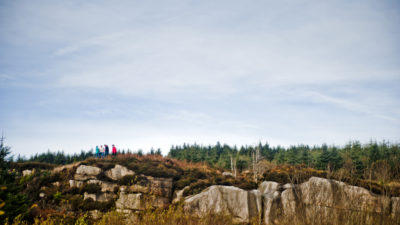
Above ground, the karst landscape is equally impressive. The extensive limestone pavements and associated karst landforms preserved within Cavan Burren Park represent some of the finest examples in Ireland. Here, clints and grikes, dolines, dry valleys and disappearing streams reveal the powerful influence of water on limestone landscapes since the last Ice Age. The park also demonstrates the close relationship between geology, biodiversity and human settlement, with prehistoric monuments positioned within a landscape shaped by karst processes over thousands of years.
Together, the caves and karst of Cuilcagh Lakelands UNESCO Global Geopark tell a story of water, rock and time, preserving evidence of geological processes, environmental change and human interaction with the landscape. They remind us that some of our most valuable natural heritage lies both beneath our feet and across the landscapes we see every day.
6 October 2026
Ongoing Trail Maintenance on Trail 4 in Cavan Burren Park
23 September 2026
Cuilcagh Lakelands Geopark has joined an exciting new all-island partnership
This is a cooperation project between Fermanagh and Omagh District Council and Cavan County Council.
This element of the project is part funded under Priority 6 (LEADER) of the Northern Ireland Rural Development Programme 2014-2020 by the Department of Agriculture, Environment and Rural Affairs and the European Union. We would like to acknowledge the assistance of County Cavan Local Community Development Committee (LCDC), Cavan County Council, Breffni Integrated CLG, Department of Rural and Community Development, the EU and EAFRD in part-funding this project. Funded by the Irish Government Under the Leader Programme 2014-2020.